This Slate article* about the recent Johns Hopkins plan** is symptomatic of a seriously — and unfortunately widespread — mistaken approach to the political economy of higher education, namely, a short-term and ahistorical focus on the TT section of the entire labor system, mislabeled as "the job market." 

Abstracting for the moment from the details of the Hopkins plan, the article's premise that "there aren't enough [tenure-track] jobs for PhDs" is an unfortunate reification of the multiple decisions of university administrators to produce the current situation by their hiring decisions. The endorsed conclusion "therefore we should restrict the number of PhD students," by unquestionly accepting the premise, just reinforces the dynamic that produces the current situation.*** 


The declining ratio of TT jobs to other employment descriptions — TAs, adjuncts, post-docs — is not a natural fact to which we must "adjust." It's not a "reality that we must reckon with" — or at least not, to return to the Hopkins situation, by hiring more MAs.**** The real fact of the matter, per Marc Bousquet and other analysts of the HE labor system, is that there are more than enough TT jobs for PhDs — it's just that they are being held by MAs and precarious PhDs.*****

In other words, following the Hopkins plan would be allowing admins to create a "crisis" (which should really just be called the current structure of the labor system) and then apply as a "solution" more of what produced that structure in the first place.

What to do? To start with, we need short-, mid-, and long-term historical analyses as well as short-, mid-, and long-term future strategies. As well as multi-scalar analyses and strategies: local and national. And analyses of sectors with different histories, missions, and challenges: private research universities, public flagships, regional publics, SLACs, HBCUs, CCs.

One thing is for sure: you never get to the mid and long term if you are stuck reacting in the short term, if you always "adjust to the realities" as if they were inescapable and unchangeable and just fell from the sky.

* It's actually is a fine example of a #slatepitch (that is, conventional wisdom wrapped in facile contrarianism): "What if the Hopkins admins were right and they're looking out for student welfare by reducing grad school admissions? Huh, what about that?"

** Previously discussed here for its blatant admin-speak about "inviting comments" and "faculty input." (By the way, I'd love for the next piece on the Hopkins plan to mention this or this.)

*** It's also paternalistic in the bad sense: are we really so sure that incoming graduate students don't know the realities of the labor system? 

**** From an IHE piece: "To compensate for fewer graduate students available to teach undergraduate course discussion sections, Hopkins plans to hire more teaching assistants with master’s degrees."

***** Bousquet comments on Facebook, with links added for this post: "The math is straightforward, and discussed in "The Waste Product of Graduate Education" [link; commentary] and a couple of chapters of How The University Works, as well as the AAUP statement, "Tenure and Teaching Intensive Appointments," and a series of pieces at the Chronicle [e.g.]:  70% or more of all positions are contingent, approaching a million faculty. The fraction of these persons not holding a terminal degree far outstrips the (relatively) small number of persons holding a PhD and seeking academic employment in most fields. It is a management mythography to describe the degreed "waste product" of this system an excrement that must be shunted off to "alternate careers." Rather than, for instance, seeing that there is a "shortage of jobs" not an "excess of PhDs."

Posted in , , ,

29 responses to “It’s not the supply, it’s the demand”

  1. Mike the Mad Biologist Avatar

    That might be the case in the humanities, but in the biomedical sciences, it really does look like there are too many researchers, unless you think we’ll have roughly twice as many jobs for bio PhDs in ten years as we do now.
    That said, within academia, the whole exploitation of adjuncts is intentional and is reprehensible.

    Like

  2. David Wallace Avatar
    David Wallace

    I can’t find straightforward online access to Bousquet’s book, and I can’t properly reconstruct the math from his article. But from what’s written here I’m struggling to see how the numbers work. Simply comparing the number of contingent positions with the number of PhD students isn’t informative without knowing the typical length of employment of those people.
    To illustrate: on the maximally exploitative model of the US PhD, the vast majority of PhD students are basically there to provide cheap teaching (from Bousquet’s article: “under the actually existing system of graduate education, the terminal degree is no longer the beginning of one’s teaching career but the logical end of that career”). Suppose that those students are on their program for an average of 8 years and that, averaged over all 8 years, they teach about half the teaching load of a 4:4 TT professor. Then if all of the teaching done by those students was stripped away and converted into teaching to be done by newly created TT professors who have forty-year careers, there will only be enough jobs for one tenth of them.
    Those numbers are more-or-less made up, but I think the conclusion is robust against the details: the strategy of taking away work from graduate students and creating TT lines to fill the gap can only provide enough work to employ all those graduate students if the average such student, across their career under the current system, does as much teaching as someone on the new TT line would do throughout their (presumably forty-year-plus) career. That sounds pretty implausible.
    That suggests to me that while taking the current number of tenure-line posts as fixed and setting grad-student numbers to fit it might well be mistaken, so is the converse strategy of taking grad-student numbers as fixed and supposing that tenure lines can be created to employ them all. The equilibrium point ought to lie somewhere in the middle. And I think that’s what Rebecca Schuman was arguing for in Slate: she notes that JH is intending to employ lots more junior people to fill the teaching gap but insists that they ought to be tenure-line.

    Like

  3. Ed Kazarian Avatar
    Ed Kazarian

    “…there are more than enough TT jobs for PhDs — it’s just that they are being held by MAs and precarious PhDs.”
    I see why you framed it that way, but my preferred framing would be “…there is more than enough work — it’s just that it’s being done by MAs and precarious PhDs, who are working under highly exploitative conditions.” I’m pushing this nuance because I think it’s rather crucial to note that part of why Bosquet’s “Waste Product” analysis is correct is that everyone who doesn’t win the lottery and get a TT job right out of grad school is pretty much in a situation where ‘keeping up’ with those folks in terms of research production (and probably teaching engagement) is going to be a massive, massive challenge.

    Like

  4. Ralph Avatar
    Ralph

    Tell me honestly which is the more humane, effective, articulate solution:
    (1) Schuman’s (and JHU’s): reduce the number of PhDs so as to mitigate the high rates of un(der)employment.
    (2) Skallerup: “we need short-, mid-, and long-term historical analyses as well as short-, mid-, and long-term future strategies. As well as multi-scalar analyses and strategies.”
    To me, the latter of these sounds like mumbo-jumbo from a bureaucrat in the movie Office Space. That’s to say nothing of the fact that Skallerup’s argument rests on the premise that JHU’s solution responds to a short term and ahistorical focus on the market. Are you kidding? Skallerup, have you looked at graphs of tenure data from the last forty years? Availability of TT positions has been declining that whole time. This is not a hiccup in the academic market, it’s a long-term trend. Your analyses have already been done by others in the field. Take a peak at them when you’re not lost in the clouds.

    Like

  5. Ed Kazarian Avatar
    Ed Kazarian

    You might want to get a little clearer about who’s making the argument you’re responding to, since last time I checked Lee Skallerup and John Protevi are two entirely different people (and I have no idea whether Lee would be on John’s or Rebecca’s side in this).
    Having made that point, you then might want to read some of the pieces that John is basing his claim on (Bosquet’s “The Waste Product of Graduate Education”) would be a good start, which call into question precisely the assumption you’re making that the whole story that needs to be told about the ‘academic job market’ in the past several decades concerns the number of TT positions available.
    To put it in simple terms, the only way that constant decline in TT positions could have been happening while we maintain a functioning higher education system is if the duties of those lost TT positions have been filled by various more precarious classes of workers.
    There is, then, not just a ‘job market’ in academia, but a labor system, which, as John says, needs to be analyzed, precisely because so many folks don’t seem to be too clear about how the entire thing works.

    Like

  6. Sam Tobin-Hochstadt Avatar

    It’s kind of striking that this post, by a tenured professor, suggests that an adjunct (the author of the Slate piece) is focusing too much on the TT market. Especially when she points out repeatedly in the article that adjuncting is the likely future of most of the grad students not accepted under the JHU plan.
    The most important fact, I think, about the academic labor market is that if we maintain a constant number of faculty, each advisor will, on average, advise over her entire career exactly one student who goes on to become an advisor herself. This is clearest in the PhD granting space, but a similar calculation applies to advising undergraduate theses.
    Many of the intuitions people have (especially current professors) were formed during a very long period of growth in universities. Unless we think that growth will continue forever, at a certain point either PhD student numbers will need to go down, or people with PhDs will need to stop expecting to get the jobs their predecessors did.

    Like

  7. Ralph Avatar
    Ralph

    Trust me: the hierarchy of the labor market is all too visible to those being exploited by it. Of all people, this is not lost on Shuman (or me). The point is that no “analyses and strategies” are about to transform the craptastic contingent positions into TT lines. This is absurd, and we need to stop pretending idealistically that it is going to happen.

    Like

  8. Jon Cogburn Avatar
    Jon Cogburn

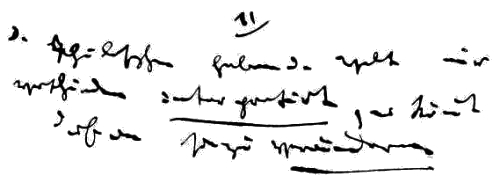
    Yeah, Marx surely had a point when he penned the following: http://upload.wikimedia.org/wikipedia/commons/c/cb/ElfteThese.jpg .
    The depressing thing is that you can reach a point where the problem is perfectly well understood and moreover where most people share the understanding, as for example Europeans and problems with the Euro (Krugman’s books are bestsellers in Germany) or Americans now with income inequality (polls show overwhelming support for higher marginal taxes and increased minimum wage), but nothing still gets done. As an intellectual I want to say that we just need to get a better understanding of how understanding does and doesn’t translates into action. But then that new understanding would prove to be just as causally inefficacious. And we can even study and understand this inefficacy, to no further effect, etc. etc. etc.
    This is, I think, the upside down version of the Kripke-Wittgenstein paradox, and strikes me as the defining problem of our age.

    Like

  9. John Protevi Avatar

    Ralph, I don’t get you on this thread. You must obviously have yourself already engaged your own “analyses and strategies” when you endorse the JHU admins as having a “more humane, effective, articulate solution” in comment 4. You’ve obviously analyzed the situation and decided the strategy of praising the Hopkins plan is superior to my denunciation of that plan as a solution that feeds the dynamic that created the problem in the first place.
    So it’s not that I’m the pointy-headed intellectual and you’re the man of action; we both have analyses and strategies. It’s just that we have different analyses and strategies, and I think the difference lies in the scales. Sure, of course, on the short-term and local scales, some MAs might get jobs at Hopkins. But my claim is that a focus on this scale keeps us from seeing the mid- and long-term history and future of such plans.

    Like

  10. John Protevi Avatar

    Hello David @2: I had hoped Bousquet would stop by to discuss his methodology, and I still do. But in the meantime I can say that my reading of these charts http://www.aaup.org/file/Instructional_Staff_Trends.pdf is that the graduate student sector in the US has stayed pretty stable at 20% from 1975-2011. The real shift has been in the tenured and tenure-track sectors relative to the non-grad student contingents.
    Key: T = tenured; TT = tenure-track; GS = employed graduate students; FTNT = full time non TT
    PT = Part time non TT
    1975:
    T = 29.0
    TT = 16.1
    Total T and TT = 45.1
    GS = 20
    FTNT= 10.3
    PT = 24
    Total FTNT and PT = 34.3
    2012:
    T = 16.7
    TT = 7.4
    Total T and TT = 24.1
    GS = 19.3
    FTNT= 15.4
    PT = 41.3
    Total FTNT and PT = 56.7
    For ways forward, I support the basic principles of the AAUP statement (linked above) on conversion of contingent lines into tenured lines:
    http://www.aaup.org/report/tenure-and-teaching-intensive-appointments

    Like

  11. Sam Tobin-Hochstadt Avatar

    John, do you know of anywhere that has similar numbers, but either (a) holding composition of set of institutions fixed, or (b) in absolute numbers of faculty, rather than in percentages?

    Like

  12. John Protevi Avatar
  13. David Wallace Avatar
    David Wallace

    John: thanks, that’s helpful (particularly the most recent link).
    Using the data from those links, here’s a different way to make my previous point. There are apparently approximately 730,000 full-time faculty and 760,000 part-time faculty. Suppose, very crudely, that “part-time” means “half-time”, then the total number of full-time-equivalent faculty in US universities is just over 1.1 million.
    Suppose every one of those 1.1 million is turned into a full-time tenure-track position held for forty years. Then the number of doctorates that needed to be granted per year to maintain that number of faculty is 1.1 million / 40, or about 27,500. If that number of doctorates were in fact granted every year, there would be a tenure-line job available for everyone with a PhD.
    The actual number of doctorates granted per year by US universities is not 27,500: it is 158,000.

    Like

  14. Sam Tobin-Hochstadt Avatar

    Thanks John, this: http://www.aaup.org/sites/default/files/files/AAUP_Report_InstrStaff-75-11_apr2013.pdf has some of the relevant data. On page 5 you can see that TT positions have increased about 25% over the last 40 years, and that the change in composition is mostly a result of the huge growth in college education in the US over that time, the vast majority of which is in the non-TT sector.
    It would be good to know how much of this is driven by change at particular institutions, and how much by the large number of new institutions and new programs over that time. My guess is that if we just looked at institutions that existed in 1975, and then only at degrees offered in 1975, the ratios would be very different. If that’s correct, then the casualization of the faculty is not really a change that happened to existing faculty, but the creation of a whole new faculty with a very different environment.
    These different possibilities, I think, would have very different implications for how to think about PhD programs.

    Like

  15. Ed Kazarian Avatar

    So basically, you’ve gone with the nihilist position (as has Rebecca): ‘Industry’s fucked, best to get out’? I have a lot of regard for Rebecca and she’s done a great deal to bring some visibility to the absurdity of contingent faculty life. More, I think she’s been incredibly effective at puncturing some genuinely dangerous attitudes of ‘moral self-sacrifice’ on the part of contingent faculty, attitudes which actually work to reinforce and sustain the system of their exploitation. But I’m not sure why recognizing that needs to entail not only that someone who’s had enough shouldn’t put any more effort into trying to change that reality but that nobody should. Analysis is a huge damn part of designing effective strategies of resistance and organizing, no? Clearly the agenda of folks here is and has been to work in service of those things. If you’d rather just say ‘fuck it,’ by all means, that’s your prerogative. But suggesting that the attempt to understand and publicize the real nature of the problem is ‘idealism’ of a facile sort is a pretty big stretch.

    Like

  16. John Protevi Avatar

    Hello David, thanks, that’s an important contribution to the oversupply thesis. But we’d need more fine-grained analyses I think. Some part of those PhDs, primarily I would think in STEM subjects, but also some social science, public policy, ed admin (K-12 or HE), and some (mostly likely quite small percent) humanities folks never intend to go into HE teaching positions.
    Unfortunately, I have to run now as I’m getting ready to go to LSU’s graduation ceremony this afternoon (where my wife will “hood” one of her PhDs!), so I can’t link to any statistical breakdown on this.
    In any case, I think Bousquet’s analyses are primarily targeting humanities (and English in particular). I should have been more clear on that. As Mike the Mad Biologist points out above, there are some disciplinary distinctions that need to be drawn.

    Like

  17. John Protevi Avatar

    Thanks, Sam, I need to ask for a rain check until tomorrow to continue the discussion. Thanks for your points, which are important ones.

    Like

  18. Ed Kazarian Avatar

    David, most of those ‘part time’ faculty probably aren’t really ‘half time.’ Many — in some fields I’d argue most — of them are almost surely working at multiple institutions and teaching loads that are at least equivalent to the 4:4 (maximal) TT prof, and often above that.
    I strongly suspect that many of them are being double and even triple counted in some of those numbers, b/c nobody’s going and checking to see whether part timer x at institution a is the same or different from part timer y at institution b.
    The thing that kills me about all of this is that since part timers are reported in really inconsistent ways by various institutions, it’s really hard to get a statistical handle on what’s happening with them except at the very macro level.
    Also, my understanding of the JHU plan is that it’s in no way going to entail hiring lots more TT (or even full time NTT) faculty to teach undergrads. The sense I get is that it’s going to ramp up the use of grad student labor to support higher pay in smaller grad departments and redirect already employed TT folks to undergrad teaching.

    Like

  19. plus.google.com/105564272584519013947 Avatar

    Folks, I apologize for haste in this dashed response, but I have holiday events with kids. @David Wallace: I appreciate the vigorous effort here.
    However: The relevant numbers are the production of research doctorates, which is about 50,000 per year:
    http://www.nsf.gov/statistics/infbrief/nsf12303/nsf12303.pdf
    Many of those are not intended for academic employment–notably in certain sciences and engineering, which is 2/3 of the total (33 thousand plus). And if they are intended for academic employment, it might not be for a teaching position, but rather a research, staff or administrative position. Very roughly: we could be “producing” in the range of 15000 relevant PhDs annually, not 10x that number.
    Further issues:
    1) Roughly half of academic “jobs” are full time. But those aren’t the same as tenure track. More than half of new “full time” jobs in many fields are nontenurable, and not filled by persons with doctorates. Remedying this situation in a couple of big US states (NY, California) could absorb all of the so-called excess doctorates in many fields–overnight. There is significant unevenness by field in the experience of this shift in the labor system, but that hardly means it doesn’t exist. It’s existed for 4 decades.
    2) What’s happened–see the AAUP piece John linked above–is that we’ve slowly redefined teaching intensive positions (3-2 loads and higher) as outside the tenure system. In 1972, teaching intensive full time jobs were nearly all tenurable. Today, most of the people talking about higher ed’s issues simply assume that teaching-intensive faculty don’t deserve tenure–as if tenure is a merit badge for researchers. That’s nonsense. The piece, for which I was lead author, gives the relevant figures.
    Plenty more to say. The assumptions David Wallace makes about the length of academic careers, the voluntary and involuntary exit rate from the tenure stream and profession, the number of folks who pursue the doctorate for nonacademic employment, etc, all skew the critique. Which, again, I appreciate for its vigor and good intentions. But I think it would be best to spend some time with the work of folks who’ve spent years on the issue.
    Best, Marc Bousquet

    Like

  20. Ed Kazarian Avatar

    Also, I think John makes a really important point re: disciplinary breakdown, and Sam’s point about growth is something we also need to account for. There’s probably some oversupply, but I’m very much inclined to believe that Bosquet is basically right that much of it is engineered — and that at least some of the growth in graduate education is about supplying those workers (especially since, recall, that funding only lasts 4 years for most, then they’re just garden variety adjuncts who hang in there teaching 2:2 or more at least until they finish, and maybe a few years more at 4:4+ at various institutions before crashing out, thus making those who are being produced by the various places in a region with graduate programs into the basic low wage labor pool for all the other institutions in that region).

    Like

  21. David Wallace Avatar
    David Wallace

    To all: don’t take my numbers as intended as a final conclusion, just as illustrative that “there are more than enough TT jobs” is not really following from the data given. If there is a clear numerical model that shows that it does follow, I’d like to see it. The data Marc provides shows that it might follow, but by no means that it does. And Sam’s minimal way of putting the point – that on average, across their career a graduate adviser can advise exactly one graduate who goes on to be an advisor themselves – still stands.
    To Marc in particular: I’m happy to spend that time – point me to a quantitative model. What I was able to find (in the admittedly short time available to engage with a blog post) was interesting and informative, but mostly qualitative. (Some people enter a discussion they’re unfamiliar with by trying out arguments and learning where they go wrong; I tend to enter them by trying out models and learning where they go wrong.)

    Like

  22. Ed Kazarian Avatar

    I’m obviously not Marc, but I really hope he can help us find more determinate data. The frustration I’ve had in thinking about this stuff for years is I think I know how it works, but the holes in available data (at least that I can find) re: what’s actually happening with adjunct/contingent employees and how much they’re really working make it hard for me to prove my theories.
    I’ll add that the paranoid part of me is inclined to believe that the gaps in reporting and data collection on this are not accidental and that lots of institutional actors are doing their very best to supply as little information here as they can possibly get away with.

    Like

  23. David Wallace Avatar
    David Wallace

    Two more quick observations: one conceptual, one empirical.
    (1) the narrative (insofar as I’m understanding it correctly) from Marc, Ed et al is that a large fraction of casualised teaching labour (be it graduate students or postdoctoral adjuncts) is being done by people who will not in fact remain in the profession until retirement age. If that’s correct, then I think as a matter of logic then converting those jobs into tenure-line, hold-until-retirement jobs will fail to provide work for all the people who on the current system would hold them – because the total number of those jobs remains fixed but the number of people leaving the job in a given year will substantially drop.
    (2) Following John’s comment that this is intended to apply specifically to humanities, here’s a more refined look at the numbers. There are apparently 5,300 research doctorates per year awarded in the Humanities (as well as about 2,400 in the unhelpful category of “Other fields”, which includes interdisciplinary and multidisciplinary studies that may overlap). There are apparently 150,000 faculty in Humanities subjects, with just over 50% of them being full-time (caveat: this figure is from 2004). Ed’s points (many ‘part-time’ Faculty are really doing full-time loads; equally, many are being double-counted) show how difficult it is to estimate full-time-equivalent numbers; I’ll stick for the moment with my 1/2 average estimate. So that’s c. 120,000 full-time-equivalent faculty.
    On my assumption of a forty-year academic career, converting all those jobs into tenure-line jobs – which I think is an unrealistic extreme – creates jobs for only 3,000 of those 5,400+ students. Returning to the 1976 level of about 75% full-time-equivalents being tenure-line creates jobs for only 2,000 of them.
    Marc’s concerned that I’m being unrealistic about the length of academic careers but unfortunately doesn’t give a suggested alternative. We can reverse the logic and ask what the length of a tenured academic’s career would need to be to find jobs for all the graduates. On the return-to-1976 model, the average length would have to be 16 years.
    (I should note, in case it needs to be said, that there are other reasons for tenure-ising casual labour than providing jobs for all our graduates. At the moment, I’m still finding Schulman’s line – that we should both reduce graduate numbers and de-casualise – pretty persuasive.)

    Like

  24. Sam Tobin-Hochstadt Avatar

    I think it’s a mistake to limit the analysis to the humanities. In particular, the fact that production of PhDs, and in fact of plausible job candidates, significantly exceeds the number of TT lines in science as well. This has somewhat different consequences there, because of the different non-academic job market conditions, but it’s real nonetheless.
    It’s also the case that there’s lots of casual academic teaching labor in the sciences: in Computer Science, my field, many introductory service courses are taught by instructors or adjuncts (fortunately here at IU mostly full-time instructors), as are many new kinds of courses (distance, online, etc). There’s also the issue of post-docs, which is particularly bad in biology and other medical-related sciences, where lots of research work is done by people who are kept going by the unlikely promise of a TT job.

    Like

  25. ben w Avatar
    ben w

    The relevant phenomenon here is, of course, general: <.”>http://itself.wordpress.com/2013/12/02/the-solution-to-unemployment-isnt-better-trained-workers-or-systemic-problems-have-systemic-solutions/&gt;. Everyone (with power) loves whinging on about training, in part, I assume, because training seems to be a matter of individuals seeking jobs and no one who has come to a position of power is also capable of acknowledging the existence of systemic effects. But the training of individuals isn’t the issue.

    Like

  26. Aaron Lercher Avatar
    Aaron Lercher

    The average age of completion for a humanities Ph.D. is 34 years in the US. http://www.nsf.gov/statistics/sed/2012/data_table.cfm
    Assume there are 120,000 FTE academic teaching positions, with no growth.
    If there are 5300 humanities Ph.D.s per year, the retirement age needs to be 57 years, in order to make room for each year’s new crop.
    If only 4000 humanities Ph.D.s want any of those 120,000 positions each year (which is about right), each job can last until a retirement age of 64. Interestingly, the rate at which Ph.D.s are taken up by academia is roughly unchanged over the past 20 years, with declines in science and engineering. http://www.nsf.gov/statistics/sed/2012/data_table.cfm
    I think the career length number is closer to 30 years than 40.4

    Like

  27. Ed Kazarian Avatar

    If Aaron’s right in his suggested revisions to David (and for that matter if a friend on Facebook is right to point out that we don’t necessarily need to have a job for every single person who graduates with a PhD), then it may seem as if we’re getting close to being able to say that (in an ideal world) we would only need fairly modest reductions in the size of Doctoral programs in order to produce a reasonable chance of sustainable, decent employment for those graduating with PhDs.
    I don’t think modest reductions are necessarily a bad thing, but I do think that reductions are dangerous when they impact program viability (as it is being suggested they will at JHU), especially since losing too many programs in many disciplines (including ours) could have a substantial degrading effect on diversity within the field. This is why I’d still be a lot less inclined to view a single institution doing this on its own (a la JHU) positively than I would a more or less coordinated attempt to modestly scale back at a general, systemic level.
    I take it that part of what was motivating John P’s original skepticism about this is the sense that what’s happening in the JHU case in particular is less a matter of trying to responsibly adjust numbers to produce better conditions and outcomes for PhD students as it is to use the perception of a crisis to neoliberalize the grad school there. The fact that the Grad Student Union at JHU is strongly against the plan seems to bear that out.
    Lastly, it’s probably worth separating two things here: 1) the discussion of the ideal case / model that David Wallace is so helpfully trying to parse out, which assumes that we can make major changes to the academic labor system as it stands, and 2) the discussion of the current academic labor system which demands increasing precaritization and increasing positional insecurity at all levels (note the rise in assessment regimes, merit pay regimes, increasingly rigorous standards of promotion, course releases and general trends toward increased workloads and constant insecurity about the continued existence of many programs, all of which affects tenured faculty), and which clearly does use graduate student labor/adjunct labor/or very high load FT labor (increasingly at sub-assistant professor ranks) as a preferred type of worker. The latter, I would suggest, has historically demanded large graduate cohorts as part of the conditions of its reproduction, but that demand has to be balanced against the institutional cost of graduate programs, which is subject to a lot of variations including things like graduate student unionization and the way it may make graduate student labor more expensive, etc. It’s quite possible that we’re seeing some general shifts in the economics of using these kinds of labor (Obamacare is going to shift it somewhat as well, as it will likely increase the number of people who need to be given benefits). That, or the increasing costs have led management types at universities to start looking at graduate programs less as ‘the future’ (or prestige markers) and more along the lines of what David Wallace suggested above, namely as a fairly bad deal where getting the least expensive possible teaching-labor is concerned.

    Like

  28. John Protevi Avatar

    I want to thank everyone here for contributing to an excellent discussion. Deciding whether what we have is an under-demand of TT jobs or an oversupply of PhDs is difficult and has occupied most of the discussion.
    I think everyone, however, is agreed that “decasualization,” as David puts it at #23, and as is put forth in the AAUP statement under the name of “conversion” (linked in the OP and at #10), should be a top priority for all of us.
    Just as an anecdotal follow up to Aaron at #26, I took my first philosophy class at age 24, got my BA at 26, began teaching that fall as GTA at 26, got my PhD at 35 (I took two MAs along the way), got my first TT job at 45, and plan to retire at 65. Thus while my teaching career will have been 40 years, only 30 of that will have been post-PhD and only 20 of that in TT or T positions. So, half precarious and half tenure or tenure-track. I don’t think that’s a modal trajectory, but I don’t think I’m an extreme outlier either.

    Like

  29. Jonathan Avatar
    Jonathan

    I’ve said this already on John’s facebook page, but the Schuman piece is simply a poor description of the JHU Plan, both in its specifics and its justifying rhetoric.
    The administration has not been floating this is as an attempt to reduce the size of graduate cohorts in response to the employment crisis. Their rationale is entirely about remaining competitive for the “best” incoming graduate students by finding the money to increase stipends and make them year-round. The reduction of incoming graduate student class sizes, they say, is simply a necessary by-product of this laudable goal. But Schuman imports her own take to say this is a humane and practical response to there not being enough TT jobs on the other, outgoing, end.
    She’s also wrong to say that the plan includes more “contact” between faculty and undergraduates (there’s plenty of that already, and in any case, it’s not addressed) and she’s wrong to say that the plan includes adjunctification. It includes term lectureships, perhaps, which are doubtless precarious, but they are not adjuntcs and they come with salary and benefits.
    I want to be clear, I’m not shilling for their plan. She is. She probably has good intentions, but she really doesn’t understand the economics of faculty hiring or graduate training very well, and she really did not read the plan carefully.
    I also think she and others, including some on this thread, are wrong to see reduction of incoming graduate student class sizes as always a right-minded response to the employment crisis. At Hopkins especially, but I imagine elsewhere as well, incoming class size reduction diminishes the quality of the education of the whole, by making seminars perilously small and discussion and peer support threadbare. In other words, it makes it harder, not easier, to be in a position to get a job.
    Likewise, no one who has spent time in graduate training would ever agree that it’s possible to cherry pick the best candidates with bigger stipends and usher them through the PhD. Graduate school just isn’t like that. There are too many contingent factors. Success is just too hard to predict. So the underlying rationale is simply misguided, and potentially disastrously so.

    Like

Leave a comment